VisionQuest: Bettany and Spader Power a Crowded but Rewarding Marvel Finale
IMDb rating: 8.2/10 (as of October 16, 2026) IMDb
Sherin Nicole sees VisionQuest as a fitting capstone to the trilogy that began with WandaVision: a lively, funny, high-energy cyberpunk family adventure that uses its sci-fi trappings to ask what makes someone a person. Whatever else it does, she says, it never gets boring.
She singles out Ruaridh Mollica as a revelation in a fully rounded turn as Thomas, while James Spader and T’Nia Miller deliver layered work that peaks in a sixth episode she thinks deserves awards attention. Newcomers can follow along easily. Her quibbles: the earnest, poetic tone can tip into goofiness, and the cast and Marvel references get crowded. Sherin Nicole, RogerEbert.com
William Hughes gives the show an A-minus, calling it a worthy follow-up that finally hands Paul Bettany’s synthezoid a story of his own. Bettany brings grounded feeling to a man who has lost nearly everything, and the series digs meaningfully into grief and what parents pass on to their children.
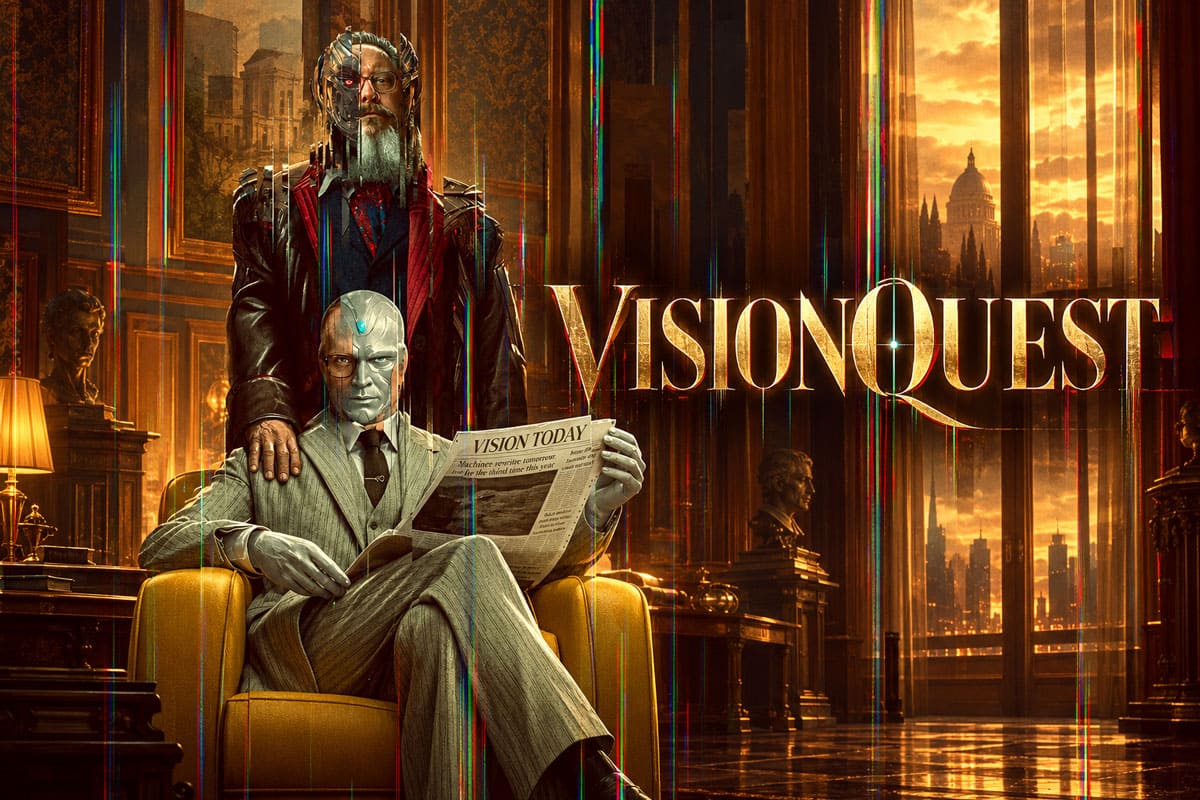
James Spader’s surprisingly warm, nuanced Ultron is the top reason to tune in, and the mid-century design of Vision’s inner world looks gorgeous. Hughes is less keen on the outer storylines, such as the bounty hunter chase and the conman thread, or on moments where Vision acts dim to move things along, though he sees these as typical Disney+ Marvel flaws. William Hughes, The A.V. Club
Tom Power calls VisionQuest a subversive, genre-hopping slice of superhero sci-fi that wraps up the Wanda and Vision saga in emotionally satisfying style. He enjoys Bettany’s colder, morally murky take on the character and rates the philosophical father-and-son sparring between Bettany and Spader as the show’s crown jewel, with the penultimate episode a standout.
Vision’s bond with Mollica’s Thomas and Miller’s Jocasta adds extra heart, and the series swings between laughs and darker violence without losing its human core. Power’s reservations: Todd Stashwick’s Paladin fades as the plot advances, an early twist lands softly, some editing is jarring and several AI supporting characters lack complete arcs. Tom Power, TechRadar
Ernesto Valenzuela is the coolest voice here, awarding two stars out of five. He agrees there is good material when the show explores who Vision is, especially in his scenes with Mollica’s Tommy, and he loves the idea of Vision’s mind as a house, with Spader’s Ultron lurking inside it and Miller’s Jocasta opening up intriguing lore.
But he finds the premiere’s momentum drains away by midseason, as overlong episodes, franchise detours to places like Madripoor and repetitive chatter from the digital housemates pad out a thin journey. Paladin goes from threat to bystander, and overall Valenzuela judges the show shakier and more bloated than WandaVision. Ernesto Valenzuela, DiscussingFilm
The consensus: Critics are united in praising Paul Bettany and especially James Spader, whose Vision-Ultron dynamic gives the series its emotional and philosophical spark, though nearly all of them note an overstuffed cast, a fading villain and uneven pacing. Most land on the positive side, calling it a rewarding if sometimes sloppy finale to the WandaVision trilogy that Marvel fans shouldn’t miss.